Historic Berlin doors: How to commission work on original hardware
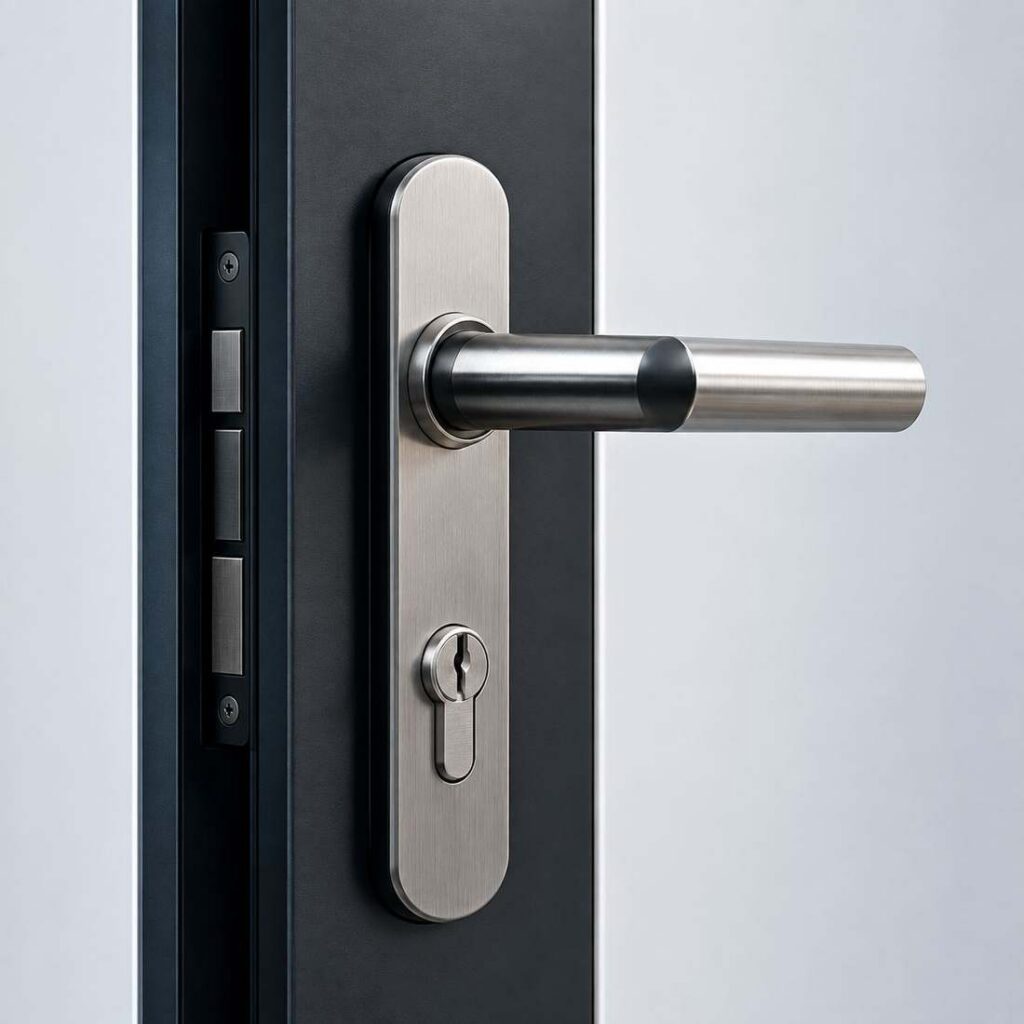
A historic door may need opening while retaining fittings worth preserving. When contacting a Berlin locksmith, first describe the immediate access problem. Separately establish with the owner or manager who may decide on permanent changes to the door, frame and original parts.
Contents
Describe what you can see and what remains unknown
A tall panelled door, old brass fitting or transom is easy to notice on the landing. Appearance alone establishes neither the lock’s age nor the building’s protection status. An old exterior may conceal modern hardware, while a plain plate may cover an unusual lock case. Describe visible features separately from previous work. If something is unknown, say so rather than guessing the precise construction.
An overview of your own door and, if requested, a close-up of visible fittings can help. Existing cracks, loose plates or damaged glass can then be identified as pre-existing. Avoid neighbours’ nameplates and detailed images of keys. Before photographs record condition; they do not justify a promise that every intervention will leave no mark.
Limit the scope of the opening
Separate access from alteration when you call. The door may simply have swung shut while a security upgrade has been on your wish list for months. For opening, the firm needs the door state, authority to enter and features such as glass or an auxiliary lock. An upgrade raises other questions: which parts may change, how should the appearance be retained and what approval is needed? The two jobs need not share an appointment.
Agree when the technician should pause for consultation. If original visible components would have to be modified, removed or replaced, who can make that decision? Can they be reached, and do they know the door? A technician can explain an option, an owner can describe the intended use and an authority may need to clarify heritage requirements. These are different responsibilities.
Identify the right contact if the property is listed
Berlin’s monuments authority generally directs enquiries about proposed work to the lower monument protection authority in the relevant borough. Owners or their representatives should ask whether the specific work requires permission and what documents are needed. Age alone does not answer this. If work has already been agreed, bring its description and check that it covers the same door.
Existing-condition photos and a sketch may be more useful for a planned appointment than a replacement selected online. Record what works, what is loose and the outcome required. Ask the firm whether it can assess this particular construction or whether a joiner, conservator or other specialist is needed. An enquiry to a locksmith does not establish heritage expertise.
Keep original parts and the handover traceable
If parts are removed with approval, agree beforehand who will retain them and how they will be labelled. A small plate with no record of its door is difficult to identify during later restoration. Photograph the agreed final condition and record outstanding points for the next visit. Confirm who can secure and operate the door in the meantime. This keeps access, preservation and subsequent decisions traceable.
Write a precise brief for the second visit
A useful handover might read: “Flat accessible. Exterior plate and handle present; movement at the lower fixing was visible before work. Management is establishing who will assess the historic fittings. Only opening was commissioned.” This distinguishes observation, outstanding question and scope. It commits nobody to restoration or a particular replacement. Add who holds any removed part and the door identifier in the building records. A specialist attending later can then prepare without removing an intact fitting from a neighbouring door for comparison.
Decision guide
| Situation | Next step |
|---|---|
| Door fell shut, original fittings visible | Limit the opening and agree to consult before alteration. |
| Planned alteration in a listed building | Establish responsibilities and any required approval before work. |
| Original part removed | Record identification, storage and handover. |


