
Door lock with a restrictor: receiving visitors in Berlin
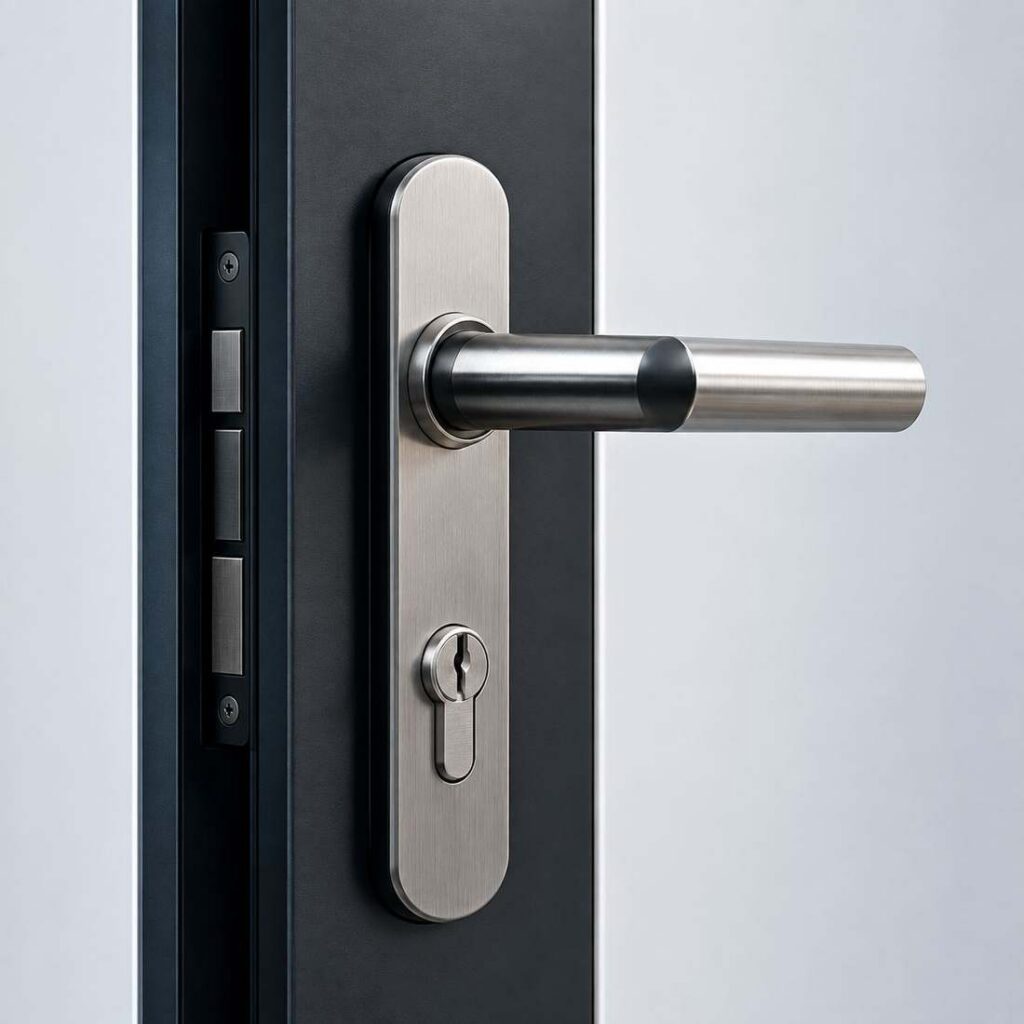
Considering a door lock with a restrictor in Berlin? Check how you receive visitors, use the inside controls and arrange access when assistance is due.
Contents
- Door lock with a restrictor: what should change when someone calls?
- Operating positions of a door lock with a restrictor
- Using a door lock with a restrictor when visitors have keys
- What the installer needs to check at the entrance
- Try the routine yourself at handover
- A door lock with a restrictor for two different routines
Door lock with a restrictor: what should change when someone calls?
Someone rings. You want to speak to them without immediately swinging the flat door wide open. An additional door lock with a restrictor may suit this situation. On suitable models the restrictor limits how far the door opens. Whether that helps in your Berlin flat depends on how you receive visitors, who operates the door and from which side.
Before the consultation, write one typical sentence such as “I want to talk through the partly open door and then release it myself.” That is a different requirement from wanting an additional lock when leaving the flat empty. A model may offer functions for both purposes. Ask to see how the proposed unit is operated in each state.
A&J introduces its work on key systems, additional locks and security crossbars. · Watch the video on Instagram
Operating positions of a door lock with a restrictor
Discuss three positions: closed, partly open for conversation and fully released. Ask whether one person can move through the sequence without stepping aside or reaching over a parked walking aid. A demonstration unit may help more than a measurement of the opening width in centimetres.
A limited opening may be enough for conversation but too narrow to receive an item. Use a real example to explain whether you want to see and hear a visitor or accept a delivery. Follow your usual identity checks with unfamiliar callers. A mechanical opening limit tells you nothing about who is at your door.
Using a door lock with a restrictor when visitors have keys
A carer or family member may hold a flat key. Before buying, ask how an engaged inside restrictor affects access on this particular model. Include the answer at handover. Saying that someone has a key only describes their access once everyone also understands the state of the secondary lock.
What the installer needs to check at the entrance
A narrow frame, existing hardware or a nearby light switch can affect where a control makes sense. Show the installer the inside of the entrance and explain what alterations have been agreed. If the door has a special rating, refer suitability to the responsible party. A catalogue photograph alone cannot establish suitability for that entrance.
Try the routine yourself at handover
The resident should be able to operate each agreed position. Rehearse a normal visit together and have the installer point out how to recognise the fully released state. Also record the keys handed over and in which state an authorised visitor can enter independently. Future users will find that more useful than a model number alone.
A door lock with a restrictor for two different routines
One resident expects a scheduled delivery in the morning while a flatmate has friends round in the evening. One needs an inside control they can easily feel, the other needs space beside a coat rack. Ask each to describe how they move at the door. That can reveal whether the proposed controls are accessible to everyone or a sample needs another trial together before ordering.
Finally, agree what expected visitors need to know. For someone who needs access at a set time, a reliable ring-and-callback arrangement can matter as much as the model chosen. Keep contacts private rather than attaching operating instructions to the outside of the flat.
Decision guide
| Situation | Next step |
|---|---|
| Talking through a gap | Ask for a demonstration of the restricted position. |
| Regular visitor holds a key | Check access with the restrictor engaged for this model. |
| Several residents | Rehearse the sequence with the people using it. |
Further guidance: Berlin Police – guidance on securing doors (PDF) (German)


