Skip to content

Locked out of a student residence in Berlin: Who to call after hours

Locked out of student accommodation in Berlin? Start with the instructions for your own residence. Some operators name an out-of-hours service. When asking for a locksmith in English, identify the residence, your room and the entrance you cannot get through.
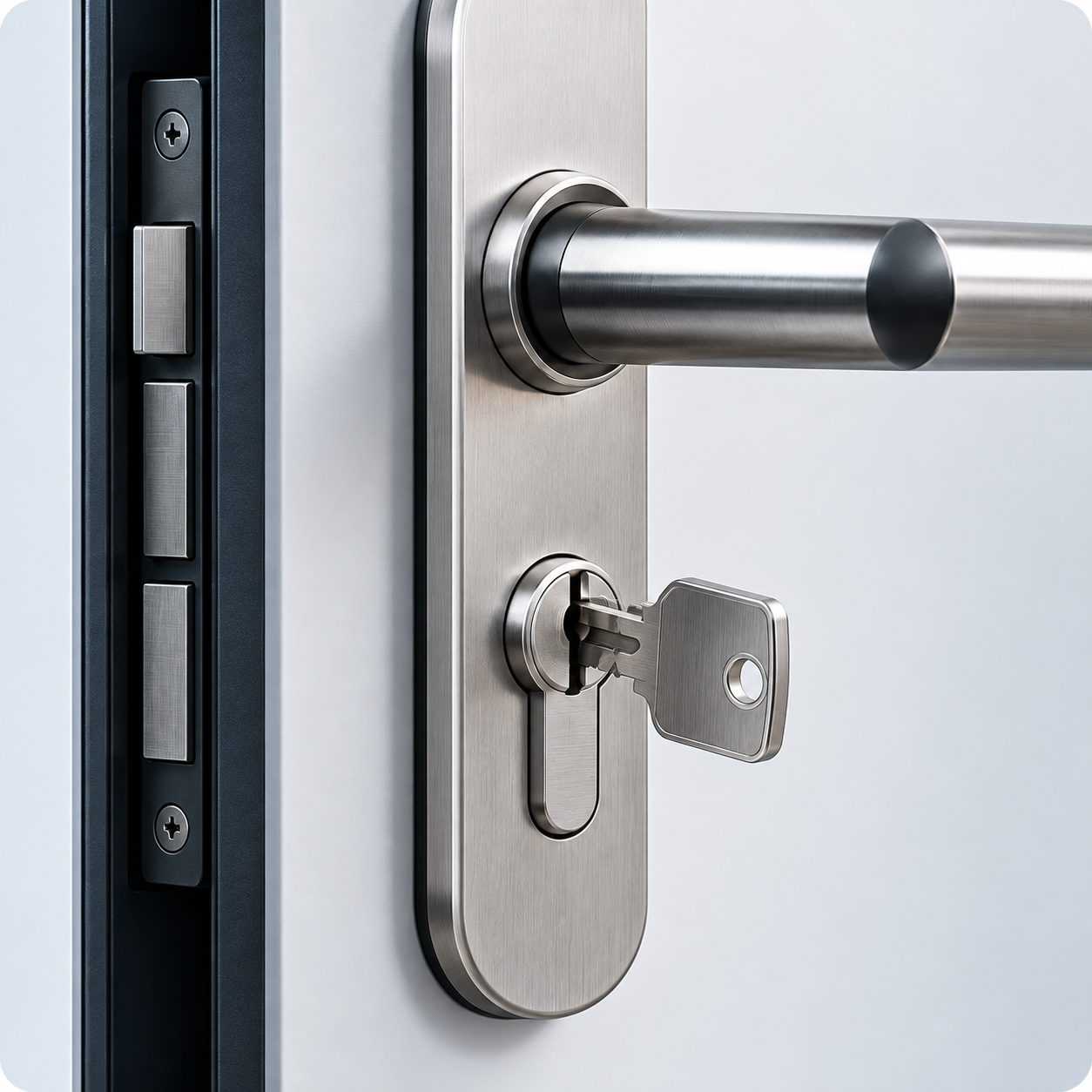
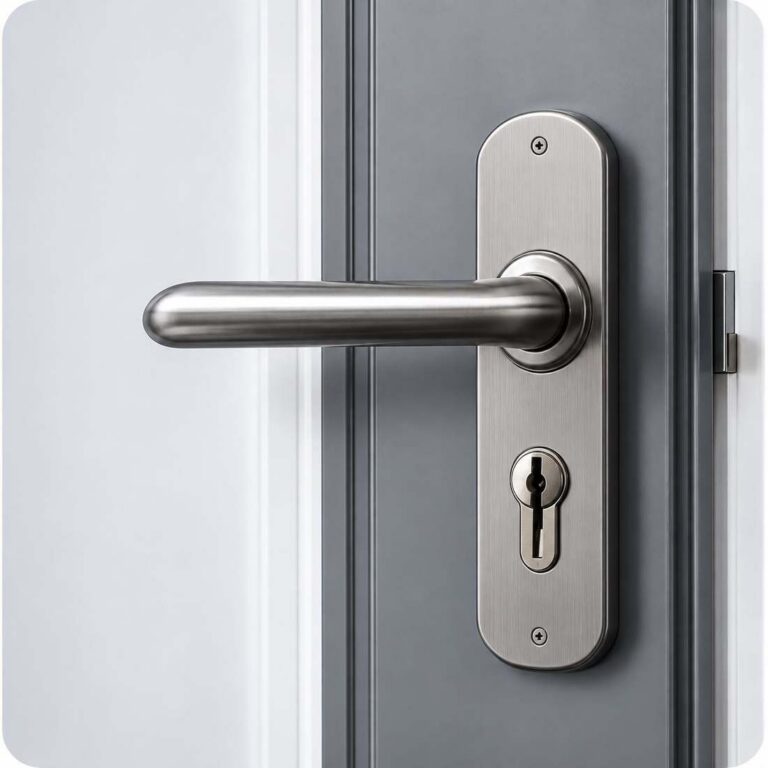
Illustration of a locked door
Illustration from the A&J media library.

Contents
  1. Who runs your residence?
  2. Building entrance, floor corridor or your own room?
  3. How to verify your room assignment
  4. What happens after you get in?
  5. Locked out just before a room transfer

Who runs your residence?

A studierendenWERK residence, private student accommodation and a room in a shared flat may look similar, yet their access arrangements differ. Find the operator in your tenancy agreement, move-in message or official building notice. The name of your university alone does not identify who administers the locks. Check the designated route before resorting to a general search for the nearest locksmith.

For its residences, studierendenWERK BERLIN publishes an out-of-hours procedure for urgent faults outside caretaker working hours. Its official page mentions difficulties unlocking a door and asks for the residence name and VO or room number. It also explains costs where residents lock themselves out or lose their keys. Consult the current guidance for your location. If someone else operates your residence, ask for that operator’s procedure before dispatching a firm.

Building entrance, floor corridor or your own room?

Identify the first point you cannot pass. Someone already in a communal kitchen needs different help from someone whose card is rejected at the gate. A resident may be able to let you into a common area without having authority over your private room. Supply the floor, building number, room identifier and whether you are dealing with a mechanical key or an electronic credential. A room number alone may be ambiguous on a multi-building site.

You could say: “I can enter the building, but I cannot open my own room. My room number is on my tenancy agreement.” State explicitly if the key is lost. If you still have the card but it is rejected, describe the response. For the operator, a loss report, verification of rights and mechanically opening a door are different tasks. Keep access codes and complete tenancy records out of shared chat groups.

How to verify your room assignment

Early in the semester, your name may not yet appear on the buzzer. Have the room allocation or an appropriate contact ready. Ask what information is actually needed before sending documents. Confirmation through the residence’s established channel is more meaningful than showing someone else’s student card. General university ID alone does not identify the room assigned to you.

If your paperwork is behind the door, mention that before dispatch. Agree whether and how verification can be completed on site. An interpreter can assist with the call without becoming the person entitled to commission entry to the room. Make this distinction clear, especially when several residents are at reception referring to different rooms.

What happens after you get in?

Ask whether the solution is a temporary key, a new card or one-time entry only. Can you secure the room after leaving? Where must a borrowed key be returned on the next working day? Note the office, deadline and contact. After a late-evening visit, keep a short written confirmation for your subsequent report to the residence.

Suppose your card works at the outer gate, while a mechanical lock secures your room. Reissuing a card alone may not solve the room problem. Ask the responsible office for a decision about that door. If it authorises a private locksmith, give the firm the contact and approved scope. This keeps clear who commissioned the job and who may approve parts or alterations to the locking system.

Locked out just before a room transfer

During an internal move, both old and new room numbers may appear in your records. Give the door where you are actually standing, not just the latest room number. State when the previous allocation ends and who handles the transfer. If the on-call service needs management confirmation, documented allocation matters more than a guess from a buzzer label. Do not attempt entry while your authorisation remains unclear.

Decision guide

Situation Next step
Residence has an on-call service Use its official contact and room identification requirements.
Key present, access card rejected Report the observed response to the operator.
One-time access granted Confirm ongoing security and next-working-day return arrangements.

Further reading

Locked out without your phone: Arranging a locksmith and a reliable meeting

Locked out without your phone? Use a borrowed phone to agree on a meeting place and a callback arrangement with its owner’s consent. The locksmith needs to know how to find you if you cannot receive calls or messages.

Illustration of a door with a handle and lock
Illustration from the A&J media library.

Contents
  1. Who can help you make a call?
  2. Agree on a meeting point without live location sharing
  3. Agree on the booking and payment without a smartphone
  4. A plan for the minutes before arrival
  5. When verification also depends on a phone call

Who can help you make a call?

A neighbour, an open shop or someone you know may lend you a phone for a short conversation. Ask whether it is only available for an outgoing call or whether the owner agrees to take a callback. A shop may close before the technician is due. If the number will be unavailable after this conversation, tell the firm before placing the order.

First ask whether an authorised person actually has a spare. Without your phone, you may not have saved numbers. A number you remember or an established contact at the building manager’s office may help. Avoid unnecessary logins to personal accounts on a borrowed device and do not share passwords. A short message passed on by the phone’s owner may be enough to bring the right person to the meeting point.

Agree on a meeting point without live location sharing

Describe a place someone can find without continuous phone contact. Along with street and number, identify the building section and a distinctive public landmark. “At the right-hand passage beside the street entrance” is more useful than “somewhere in the yard”. Say whether your name is on the buzzer and whether the gate is accessible. A clear arrangement need not require a photo or live location.

Agree on a realistic time window and what will happen if arrival is delayed. Can the technician ring a particular buzzer? Can the neighbour accept a callback until a certain time? What will you do if the meeting point is unsafe to wait at? Write down the firm’s name and number. You can then report a change from another phone without having to search for the provider again.

Agree on the booking and payment without a smartphone

A price confirmation sent to a phone behind the door is of limited use. Ask the dispatcher to repeat the work and total slowly so you can write them down. Note whether the door fell shut or was locked, and whether extra work requires separate approval. Lending a phone does not make its owner the customer. Tell the company who is commissioning the visit and who is merely enabling contact.

If you usually pay by phone, explain which payment method will actually be available. Is your wallet inside? Can you reach it once authorised entry is restored? What methods does the firm accept for this job? Agree beforehand instead of expecting the helper to pay. Discuss verification too if both your ID and digital records are in the flat.

A plan for the minutes before arrival

For example, the shop phone is available for twenty more minutes but the technician will arrive later. Agree on a specific time to move from the shop entrance to your building and tell dispatch. Even if the neighbour can open the communal door, the customer should wait at the agreed meeting point. The technician should not have to ask several residents to identify a stranger. Request a receipt after the visit; you can use your own email address again once inside.

When verification also depends on a phone call

If your ID is inside and the manager can confirm details only by phone, agree on the order of calls. Ask the phone owner whether a callback from management at a stated time is acceptable. Tell the technician the arrangement. Do not present someone else’s number as your own. If the callback is impossible, the firm can establish before dispatch what other evidence it could assess.

Decision guide

Situation Next step
Borrowed phone available briefly Agree on a meeting point and delay arrangements immediately.
ID and payment inside Discuss verification and payment before dispatch.
Helper can take a callback Agree on consent, availability and who is commissioning the work.

Further reading

If you have access to a device but cannot take a call, use this written locksmith enquiry template.

For a resident stranded outdoors, see how to direct help when locked out on the balcony.

Crossbar locks beside a glazed side panel: Assessing the support

A crossbar beside a glazed side panel raises different questions from a door between two solid walls. Door width alone cannot tell you where both ends can be securely supported. Have the side construction assessed before buying.

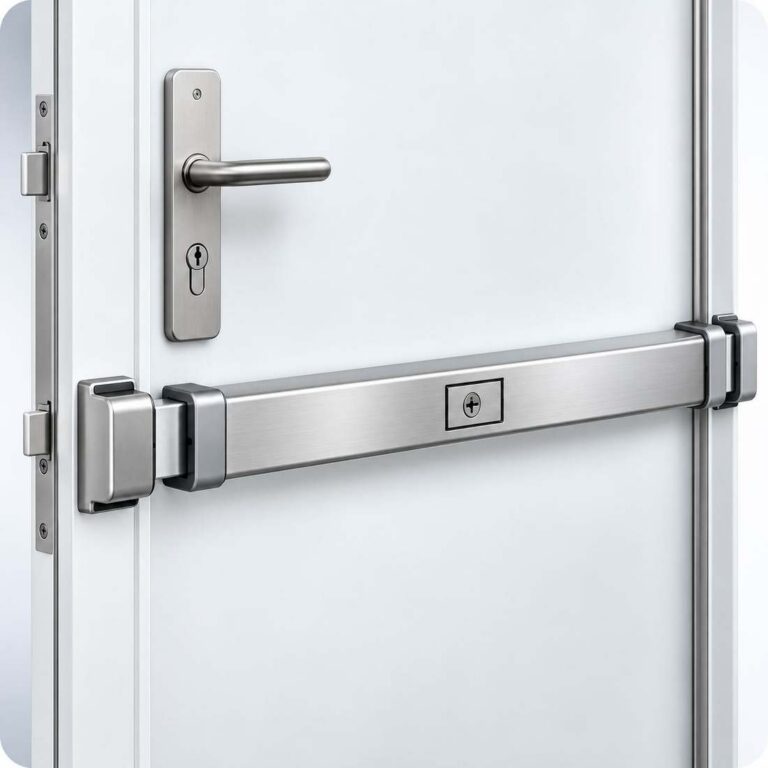
Illustration of a door with a security crossbar
Illustration from the A&J media library.

Contents
  1. What is actually beside the door leaf?
  2. Why the two sides need separate assessment
  3. Think through everyday use before buying
  4. What to look for in the quote
  5. What a photograph cannot establish

What is actually beside the door leaf?

The entrance may look wide enough at first sight. On one side, however, a narrow frame section borders a fixed pane, while a wall meets the other side. Describe the moving leaf, fixed side panel, frame and adjacent wall individually. For assessment, that distinction matters more than one overall measurement across the entrance. A straight-on photograph offers only a limited view of frame depth and construction.

Do not drill test holes to identify the substrate yourself. What lies behind a visible covering may differ, and damage near glass is especially consequential. Provide a construction description, existing plan or door-set records if available. Mark which side contains fixed glazing and which way the moving leaf opens. Include nearby fixtures or radiators in the description.

Why the two sides need separate assessment

On many crossbar systems the ends engage with side receivers. These must suit the construction and withstand the intended loading. One suitable side does not automatically compensate for an unassessed one. What matters is the arrangement specified by the manufacturer for that model and location. A frame profile that looks sturdy is not necessarily suitable for an additional fixing.

ABUS describes an alternative wall anchorage for certain models where space is limited for a conventional receiver. Its PWA2700 accessory has defined conditions of use and fits specified bars. It is not a general solution for any pane or narrow upright. Ask the firm to state which component it proposes on each side and which conditions still require confirmation on site.

Think through everyday use before buying

Planning goes beyond the receivers. Will the door open fully beside the fixed panel without the handle or bar housing striking anything? Can authorised residents reach the key comfortably? Will ordinary passage remain usable for the intended users? A shared entrance also requires approval from the responsible party. A door bearing a special designation needs separate clarification of use requirements and permissible alterations.

Picture a building entrance with broad glazing to the right. The intended bar height falls exactly at a moulding. Comparing leaf width against product width would overlook it. An on-site appointment can assess installation conditions, movement and alternatives. If suitability is unresolved, keep that qualification in the quote rather than assuming a later alteration will be available.

What to look for in the quote

Request a description of the selected system, proposed receivers and modifications to the existing door set. Ask which visible areas would change and who must assess any glazing or frame work. This distinguishes installation alone from an offer involving additional trades. For rented property or a communal entrance, approvals should be in place before the firm installation date.

Handover involves more than looking at the fitted bar. Have its intended operation, full engagement and reopening demonstrated. Record the model, accessories and maintenance contact. If one side behaves differently months later, those records can help a specialist identify the right receiver without having to reassess the entire entrance from scratch.

What a photograph cannot establish

In an interior photograph a painted cover may resemble a broad timber post. If you have no reliable construction records, label the photograph “construction unknown”. Add a safe overview so the specialist can locate the detail. Recording uncertainty is more useful than guessing a material. The quote can include a check before anyone orders parts or agrees a firm installation date.

Decision guide

Situation Next step
Glass directly beside the moving leaf Have a professional identify a load-bearing fixing point.
Narrow wall return on one side Assess the two receivers separately.
Construction records unavailable Arrange an inspection before committing to a product.

Further reading

If the panel beside the active leaf moves, check the specific issues for a crossbar on a double-leaf door.

Replacing a crossbar lock cylinder while keeping the bar

Replacing a crossbar lock cylinder can make sense when the bar still works but the key arrangement needs to change. Whether the cylinder can be replaced separately depends on the model and configuration. Identify both before ordering.

Illustration of a door with a security crossbar
Illustration from the A&J media library.

Contents
  1. Which key should operate the crossbar afterwards?
  2. Identify the model before buying a cylinder
  3. Separate mechanical trouble from a change of keys
  4. Check both locks at handover
  5. Record the key count for the crossbar

Which key should operate the crossbar afterwards?

A flat door has a main cylinder plus a bar across the door leaf. If a key goes missing, establish whether it operated one lock or both. Replacing the main cylinder by itself does not alter the auxiliary bar’s keying. For the enquiry, write down two lines: the main lock and its keys, and the bar and its keys.

The reason may be convenience rather than loss. An authorised user may want to operate both locks with a single key again. The intended key system must then be compatible with the bar’s construction. Ask whether other people should still operate just one of the locks. A single new key may simplify use but inadvertently broaden access. Settle the intended permissions before choosing a product.

Identify the model before buying a cylinder

The ABUS PR2700 is a specific example. Its manufacturer describes a replaceable cylinder and possible integration into locking systems. That does not establish compatibility with any cylinder or with any other crossbar. Gather the installation record, model designation and details of how the bar is operated. If the model marking is hidden, let a specialist identify it before attempting work on installed security hardware.

Say whether the bar is operated from both sides or only inside. Visible protective fittings and door thickness may also matter. Do not assume that a cylinder from an ordinary flat door will fit its auxiliary lock. The provider should check the version and protection requirements for the particular system. If a photograph cannot establish these details, an inspection is more useful than a guess.

Separate mechanical trouble from a change of keys

If the bar ends no longer travel freely in normal use, or resistance occurs only with the door closed, the whole assembly needs assessment. Changing a key cannot reposition a receiver that has shifted. Say when the trouble began and whether the main lock still works normally. Avoid using extra force. If the door is locked and inaccessible, discuss entry as the first, separate job.

For example, a bar may have worked reliably for years, but after a change of keyholders a former user should no longer have access. That is primarily a permissions question. Another household may report that the key turns part of the way before the bar catches. That calls for a functional inspection first. Both might ask for a cylinder change, but an identical quote without further questions would tell them little.

Check both locks at handover

Before placing the order, agree which parts are to be retained and when the technician must consult you. After the change, record which key operates the main lock and which operates the bar. Check normal use with the technician’s guidance. Clearly withdraw old keys that look similar. If the door belongs to a wider locking system, the administrator should also record the access change in the key register.

Record the key count for the crossbar

A household receives new crossbar keys while its main lock remains unchanged. A relative still has the flat key and assumes they can enter when needed. At handover, establish whether they will also need and should receive the second key. Record issues separately for each lock. That way misunderstandings or informal sharing at the next visit do not undo the intended change in access rights.

Decision guide

Situation Next step
Bar works, access rights change Check the model and whether a cylinder-only solution is available.
Bar catches at the frame Have the mechanism assessed before ordering parts.
Main lock and bar use the same key Establish what a change would mean for both locks.

Further reading

If the model is unknown, see how to enquire about crossbar spare parts.

Extending a keyed-alike system: Replacing cylinders in stages

To extend a keyed-alike system, identify the future doors before replacing the first cylinder. Check the existing system, ordering authority and which people should be able to enter each space with the same key.

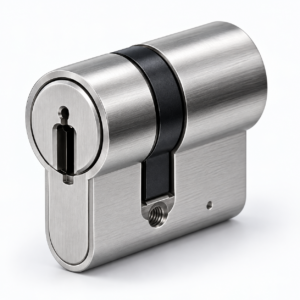
Illustration of a lock cylinder
Illustration from the A&J media library.

Contents
  1. Start with a door-by-door plan
  2. What makes a later order possible?
  3. Different dimensions, the same key
  4. A worked two-stage example
  5. When the second door now serves different users

Start with a door-by-door plan

An owner wants a new flat entrance cylinder now and hopes to use the same key for a private storage room later. Their door list should capture two things: when each change will take place and who should eventually have access. The flat needs an immediate change; the storage cylinder will wait until renovation is complete. Ordering solely by the dimensions of the first door leaves future permissions unresolved.

For each door, write down who should use it. Relatives may need keys to the flat without needing entry to the storage room. In that case one shared key for both doors may not fit the plan. A seemingly convenient simplification can grant more access than intended. Discuss this before buying, especially if a door belongs to a communal system or different people manage the spaces.

What makes a later order possible?

Ask the specialist for the manufacturer, system name, current ordering route and any required security card. For protected systems, a card can establish entitlement to order. Procedures and records vary by product. A key’s outline, or knowing only that two cylinders share a manufacturer, does not identify a particular keying for an additional order. Send codes or card photographs only through a verified, authorised channel.

Distinguish what the provider can confirm today from what must be checked at a later order. It may identify the current system without being able to guarantee indefinite availability. Ask how a different contact could find the job in a year’s time. A record identifying the system correctly will then be more useful than a photograph of packaging that has since been discarded.

Different dimensions, the same key

Even where two cylinders should accept one key, each door may require different internal and external lengths, fittings and operating functions. A storage door with an interior thumbturn differs from a door operated by key on both sides. Record each door separately. Wanting a common key is not a reason to order two mechanically identical parts. Access design and physical fit both need checking.

If the second cylinder comes later, plan the interval. Which keys remain in circulation? Can the old and new sets be distinguished? Must the storage-room custodian retain the old key until the second appointment? Keep a small issue record with dates and functions, separate from the keys. Do not label an exposed fob with a precise address and room.

A worked two-stage example

Suppose the flat cylinder is replaced at the start of the month, and the storage cylinder only after new door fittings go in. First agree the correct flat cylinder and its handover. Record the intended keying for stage two, but check the final dimensions when the fittings are complete. If the authorised users change in the meantime, revisit the plan. The storage room may ultimately need separate keying.

At the end of stage one, establish who keeps the records, who may place the next order and what details of door two are still missing. At each installation, check with the firm that the designated copies operate the designated doors. This matters especially while older keys are still in circulation that operate only some of their former entrances.

When the second door now serves different users

During renovation the formerly private storeroom is divided between two parties. Ordering stage two unchanged could inadvertently give every flat keyholder access to a newly shared space. Recheck the permissions before each extension and record what has changed since the first appointment. Only then decide whether an additional matching cylinder or separate keying makes sense.

Decision guide

Situation Next step
Second door still being altered Plan access now and check final dimensions later.
Different user groups Decide explicitly between shared and separate access.
Existing system unknown Verify identification and ordering authority before purchase.

Further reading

If the door leaf is changing too, see how to coordinate the lock for a replacement door.

If the access rights are unclear, see how to plan a replacement when the master key chart is missing.

With two separate flats, plan which keys should open the shared entrance.

Locked door during a power cut: Which part of access has failed?

A locked door during a power cut does not automatically call for a new cylinder. The buzzer, release button, reader and mechanical key in a Berlin building may work independently. Identify the first point on your route where access fails.

Illustration of a locked door
Illustration from the A&J media library.

Contents
  1. Identify which door is affected by the power cut
  2. Establish the extent of the outage
  3. What the locksmith needs to know before travelling
  4. Update the job when power returns
  5. If the power returns during the callout

Identify which door is affected by the power cut

Imagine the route from the street to the flat as a series of entrances. The intercom at the street gate is silent, but a neighbour can open the gate normally from inside. Once on the stairs, you find that your key opens the flat as usual. The problem then appears to concern communication or the electrical release. Commissioning an opening of the flat door would miss the actual fault.

Conversely, the bell may work and a reader may respond, yet the intended credential cannot open the door. A light at the reader shows a visible response. It does not establish whether permission is missing, a component has failed or someone also locked the door mechanically. Ask the responsible operator to assess the particular system. Electrically equipped doors do not all behave alike during a power cut.

Establish the extent of the outage

Are there signs of a wider outage? Is the stair lighting out, or do you have confirmed information that other flats or neighbouring buildings are affected? Stromnetz Berlin provides information about outages on its network. For individual equipment downstream of the building connection, start with management or the responsible electrician. Do not operate other people’s fuses or controls. You need not prove the cause before reporting observations.

Ask management for the normal authorised way in during disruption. A resident may be reachable by telephone even when the intercom is out. If there is an approved mechanical backup key, only someone entitled to use it should do so. You cannot infer that such a key is available merely from the shape of a reader. Say what has already been checked and what remains unknown.

What the locksmith needs to know before travelling

Keep the instructions specific. “I can enter the stairwell, but my flat door is locked mechanically and I don’t have the key” differs from “no resident can operate the electric building entrance”. In the former case a locksmith can discuss authorised entry to the flat. In the latter, management and the system operator should coordinate a common-access fault. Do not give codes or remote-control details to unfamiliar callers.

With an integrated system, ask who will test everything after access is restored. A firm may be able to get you in without fixing the electrical cause. Agree whether a second contractor is required and who can keep the door secure in the meantime. If an escape route is blocked or someone is in immediate danger, reporting the hazard takes priority over negotiating a private repair.

Update the job when power returns

Power returns and the buzzer starts working. Within your access rights, check whether the entire route into the flat works normally. A working building entrance does not solve a locked flat door without a key. If all access is restored, tell each firm you booked directly. Record the outage time, effects and return to normal so a recurring fault can later be narrowed down.

If the power returns during the callout

Suppose the technician reaches the street just as power returns. The buzzer works again, but the reader at the office suite still does not respond. Give dispatch that precise update. Ask whether the original provider or the access-system administrator should handle the remaining problem. If the callout ends, get confirmation. A report to the electricity network operator does not automatically close a privately booked visit.

Decision guide

Situation Next step
Only the buzzer is silent Reach the resident or manager through another normal channel.
Several electrical systems affected Report the extent and identify the responsible outage service.
Mechanical flat door remains locked Describe authorised opening as a separate job.

Further reading

When several residents are waiting outside, see how to coordinate one locksmith for a shared entrance.

A door closer slams shut: What to record for an inspection

A closer may slam a door, close it too slowly or leave it ajar. The useful distinction is where in the closing movement the problem occurs. Report what you observe during normal use and leave adjustment and work on the closer to the responsible specialist.

Illustration of a door lock
Illustration from the A&J media library.

Contents
  1. Where in the closing movement does the door slam?
  2. What changed since the door last worked normally?
  3. Locked out, or reporting a shared-door fault?
  4. What to check when the work is handed over
  5. When the closer behaves differently in a draught

Where in the closing movement does the door slam?

Think of the movement in stages: the user lets go, the leaf moves towards its frame, the last few centimetres close and the latch engages. A door may move rapidly all the way or slam only at the end. Equally, it may start normally and never reach the closed position. These patterns raise different questions for inspection. A description of what happens is more useful than a request for a particular replacement device.

Observe only normal, safe use. Keep fingers and objects out of the gap and do not push harder to reproduce a slam. If the door is marked as an escape, fire or smoke-control door, mention that marking when contacting building management. Do not wedge such a door open. Trouble with its closing function belongs in the building’s agreed maintenance and reporting process.

What changed since the door last worked normally?

Did the behaviour begin after frame work, a new seal or a change in the entrance area? Does it happen only when the other lobby door is open? Report the association without treating it as a proven cause. There may also be a noise or visible damage. Do not touch loose parts; note when you first saw them. In a building with multiple entrances, identify the particular door in the report.

GEZE’s door closer guidance distinguishes closing speed from the final latching action. These terms help communication but neither identify your unit nor replace professional adjustment. Behaviour appropriate for a heavy entrance may be unsuitable for another construction. A generic online adjustment guide may therefore be inappropriate for the door and any protective function it has.

Locked out, or reporting a shared-door fault?

If you are locked out, identify the door you cannot get through first. A closer at the communal entrance and a flat door that fell shut on the third floor are two separate jobs. Opening the flat will not fix the communal entrance. Conversely, the contractor maintaining that entrance does not automatically take on a private flat opening. Establish responsibility before different people book different visits.

If a shared entrance no longer closes reliably, management needs an accurate description. For example: “Side-wing entrance. The leaf moves almost to the frame and stops there. It was last used normally this morning.” That account can be checked. Saying “the lock is broken” presumes a cause and could send someone to work on the wrong component.

What to check when the work is handed over

Ask the responsible person to assess the result under normal operating conditions. Does the door reach its intended final position and then open using its normal controls? If the fault appeared only when the second lobby door was open, repeat that information at handover. Record outstanding symptoms, required parts and the next responsible contact. A quieter closing sound alone does not establish that the closing function is restored.

When the closer behaves differently in a draught

In an entrance lobby the slam may occur only when inner and outer doors are opened in succession. Tell management which door is affected and whether anyone has observed it in still weather. The caretaker can pass that on without asking residents to reproduce it. If the door subsequently stops closing reliably, report that change explicitly. An earlier noise report says nothing about its security today.

Decision guide

Situation Next step
Noise only at the very end Describe the final movement and whether the latch engages.
Door stops before latching Tell the manager the entrance is not securing itself.
Your own flat door also fell shut Separate the private opening from building maintenance.

Further reading

If the door rebounds from the frame, see what to report when the door will not latch.

Sunday locksmith calls: Agreeing weekend and out-of-hours charges

When calling a locksmith on Sunday, ask what the quoted price covers in labour, travel and supplements. Consider whether you need entry immediately or have a reliable alternative until a regular appointment.

Illustration of a door with a handle and lock
Illustration from the A&J media library.

Contents
  1. Which time matters for a Sunday callout?
  2. Enter now or wait somewhere safe?
  3. Make a surcharge intelligible
  4. What the invoice should let you check
  5. A sentence to confirm a Sunday booking

Which time matters for a Sunday callout?

One customer calls late on Saturday for a possible Sunday morning visit. Another calls on Sunday to arrange an appointment on Monday. Ask which period the quote covers, what supplement applies and which items it applies to. The date of the initial telephone call alone does not establish the price of work done later. What matters is the agreement for the work and time you actually want.

Make the comparison concrete. Describe the same flat door and request two figures: the earliest available visit and a scheduled appointment. Ask whether each includes travel, labour and tax. If the firm gives an arrival window, establish whether the price changes if the technician arrives towards its end. An early figure is less useful if a different tariff could begin without another conversation.

Enter now or wait somewhere safe?

Take stock of what is available outside your flat. Does someone you trust have the right spare, and are they really on the way? Is there somewhere accessible to wait? Are essential items only available inside? If there is immediate danger, comparing prices for a routine opening should not come first. For an ordinary key problem, weigh the benefit of earlier access against the extra cost to you.

Suppose the flat is locked and someone can bring an authorised spare on Sunday evening. If you can safely stay with friends until then, you may need no callout at all. If their arrival is uncertain, arrange a callback time with the keyholder. That gives you a decision point without commissioning two visits. Make clear to the locksmith if you are only asking for a quote.

Make a surcharge intelligible

Record more than the percentage. What amount does it apply to? Applying a supplement to labour alone can produce a different total from applying it to several items, even at the same percentage. Ask for the final figure and the specific work it covers. There is no universal A&J Sunday figure in this guide; obtain a quote for your own circumstances.

If conditions at the door change, distinguish the time supplement from the technical change. A door found to be locked with a key may require different work from a door that simply fell shut. That difference does not explain an automatic increase in every item. Before more work starts, ask what changes, why it changes and whether you want to authorise it.

What the invoice should let you check

Keep the time-window confirmation and your booking notes until you have checked the invoice. Compare the service address, date, time, door condition, work and agreed supplements. A card slip alone will not itemise the visit. If a charge is unclear, ask about that particular item. This makes it easier to discuss the work, travel allowance and time supplement individually.

A sentence to confirm a Sunday booking

Before hanging up, restate the offer in your own words: “This covers opening a flat door that fell shut at this address, in the specified Sunday window, with the items we just discussed included.” Add the actual agreed price and ask what change would require a call. Repeating the arrangement helps both parties spot a misheard figure or time. If you later move the visit to Monday, get the revised amount and window confirmed too.

Decision guide

Situation Next step
Sunday visit, no spare available Request the total price for that immediate callout.
Monday visit possible Compare prices for the same door and scope.
Arrival window crosses a tariff boundary Agree what happens if the visit is delayed.

Further reading

If the call and arrival fall in different price periods, confirm which price applies.

Locked out with the hob on: When to call the Berlin fire service

Hob on and locked out? If there is smoke, reason to suspect a fire, visible flames or immediate danger in Berlin, call 112 immediately. Do not wait for a locksmith. Move to safety and follow the fire service’s instructions.

Illustration of a door with a handle and lock
Illustration from the A&J media library.

Contents
  1. What do you know about conditions inside?
  2. Give emergency crews an unambiguous address
  3. What a private locksmith call covers
  4. After the immediate situation has been resolved
  5. Giving a companion one clear task

What do you know about conditions inside?

Once the flat door has fallen shut, your last clear memory of the kitchen matters. Was a pan on a hot ring? Do you know you switched it off or are you unsure? Is anyone inside? Tell the emergency dispatcher what you know and what you suspect. If there are concrete signs of fire, do not try to confirm it yourself first. The dispatcher can ask questions and arrange the appropriate response.

If you smell smoke in the building or the stairs are already smoky, do not enter to look from another floor. The Berlin fire service publishes guidance on what to do in a fire. Someone who is already safely outside should not run back to prove that the hob was off. Tell the dispatcher where you are calling from and which part of the building you can actually see.

Give emergency crews an unambiguous address

The street and building number are a start. Where there is a front building and several courtyard buildings, responders also need the correct staircase, floor and flat location. Say whether you are at the street gate, in the courtyard or outside the complex. Give a callback number, answer questions and stay on the line until instructed otherwise. A second person may direct responders from a safe location without putting themselves in danger.

For example, someone goes out briefly with the rubbish. The door falls shut and they clearly remember leaving a frying pan on a hot ring. “I’m locked out” tells only part of the story. The ring, the pan’s contents, anyone still inside and any smoke already noticed also matter. Report concrete grounds for concern immediately and let the dispatcher decide the response.

What a private locksmith call covers

If the hob is definitely off, there is no danger and the key is simply inside, you can arrange normal entry. Ask an authorised person for an accessible spare. If none is available, tell the locksmith the door’s actual state and confirm the work, travel and total price. A private opening cannot take the place of assessing a suspected fire.

If you already booked a locksmith and the situation changes, an emergency call takes priority where there is danger. As soon as it is safe, have someone update the firm. Prevent a technician from unknowingly entering a hazardous area. “Please hurry” leaves out essential information. Explain that the fire service has been called and that the meeting point or instructions have changed.

After the immediate situation has been resolved

When the fire service attends, follow the on-site instructions about whether and when you may go back inside. After the flat is released, establish with the responsible person whether the door can be operated and secured normally. Record any subsequent security work separately from the initial opening. Note who will inspect damage and who controls access pending repairs. The original reason for calling and the eventual repair may be quite different.

Giving a companion one clear task

Confusion comes easily when neighbours all want to call the owner, a locksmith and the fire service. Once the emergency dispatcher knows, give a companion one clear, safe task: wait at the agreed street location and identify the correct building. Tell the dispatcher if observations change. Nobody should re-enter a possibly smoky area to check. After clearance, that companion can update private bookings while you listen to the on-site instructions.

Decision guide

Situation Next step
Smoke, flames or suspected fire Call 112, give your safe location and follow instructions.
Hob confirmed off, no sign of danger Arrange a spare or a normal door opening.
Fire service already called Follow the responders’ directions and update any private booking.

Further reading

A care worker is outside a locked door: Who coordinates access?

When a care worker finds a locked door, the first question is how the person inside is doing. Call 112 if there is reason to suspect an acute medical emergency or immediate danger. For an ordinary access problem, follow the care provider’s agreed contact procedure.

Illustration of a door with a handle and lock
Illustration from the A&J media library.

Contents
  1. What does the care worker actually know?
  2. Use the agreed arrangements for an access problem
  3. Give the locksmith a workable brief
  4. Close the loop for the next visit
  5. Check the contact chain before the next home visit

What does the care worker actually know?

A care worker arrives for an agreed visit but nobody opens the door. Tell the responsible contact what you can observe: you arrived at the correct entrance at the agreed time, rang the bell and perhaps heard a call from inside. Distinguish observations from assumptions. Silence from the buzzer might be an intercom fault. A call for help or other signs of immediate danger change the situation. In that case, do not wait for a private locksmith appointment.

When calling emergency services, give the street, building number, building section, floor and reason for concern. Explain where you are standing and whether the route to the flat is clear. Stay available, answer the dispatcher’s questions and end the call when instructed. Others can meet responders at an agreed entrance if safe. Medical details belong in the conversation with the responsible service, not on a publicly visible doorbell label.

Use the agreed arrangements for an access problem

If the resident can be contacted and confirms that the door simply cannot be opened, agree on the next step with them and the care coordinator. Is there a stored key, who holds it and who may release it? A key at the office is not necessarily authorised for this visit or available in time. Record whether instructions already exist in the care contract, in a separate agreement or are being given for the first time.

Relatives can provide valuable information. Still establish who can actually commission the opening. One person may meet the technician while another confirms authority. Keep those roles distinct. Regular visits do not automatically authorise a care worker to approve a new cylinder or changes to a communal door. If authority is unclear, the care coordinator remains the first organisational contact.

Give the locksmith a workable brief

A clear enquiry might be: “The resident is on the phone. She confirms the visit and wants to let us in but cannot use her key. The care worker is on the second floor outside her flat.” This tells the firm that contact has been made and identifies the door. The firm will decide what other verification is needed in this case. Ask for the total price and record who is placing the order.

If the worker has to continue their rounds, arrange an explicit handover. A technician should not arrive without a contact because the person originally waiting has gone to another visit. Set a new meeting point and share the receiving person’s name through the agreed channel. If the resident’s condition changes and there is immediate danger before the visit, contact emergency services immediately.

Close the loop for the next visit

After routine entry, establish how the next authorised care visit will gain access. Was the door only opened or was its lock changed? Will the care service’s stored key still work? Have the responsible person confirm the new arrangements. Keys and information about where they are held belong in the agreed system, not in an openly accessible message. Record the door’s condition, the handover and any reply still due from management.

Check the contact chain before the next home visit

A correct number does little good if the agreed contact is on holiday. At a planned handover, check whether a deputy has been nominated and whether the resident knows their role. Staff should know when the regular coordinator is reachable and who takes over afterwards. This helps with an ordinary lockout. Where there are signs of an acute emergency, looking for another internal number must not delay calling emergency services.

Decision guide

Situation Next step
Immediate danger or suspected medical emergency Call 112 and identify the correct building entrance.
Resident reachable, access arrangements unclear Coordinate authorisation and spare keys with the care team.
Worker must leave before arrival Arrange a named replacement contact and handover.

Further reading

For regular visits, account for an additional lock with a door restrictor.