
A care worker is outside a locked door: Who coordinates access?
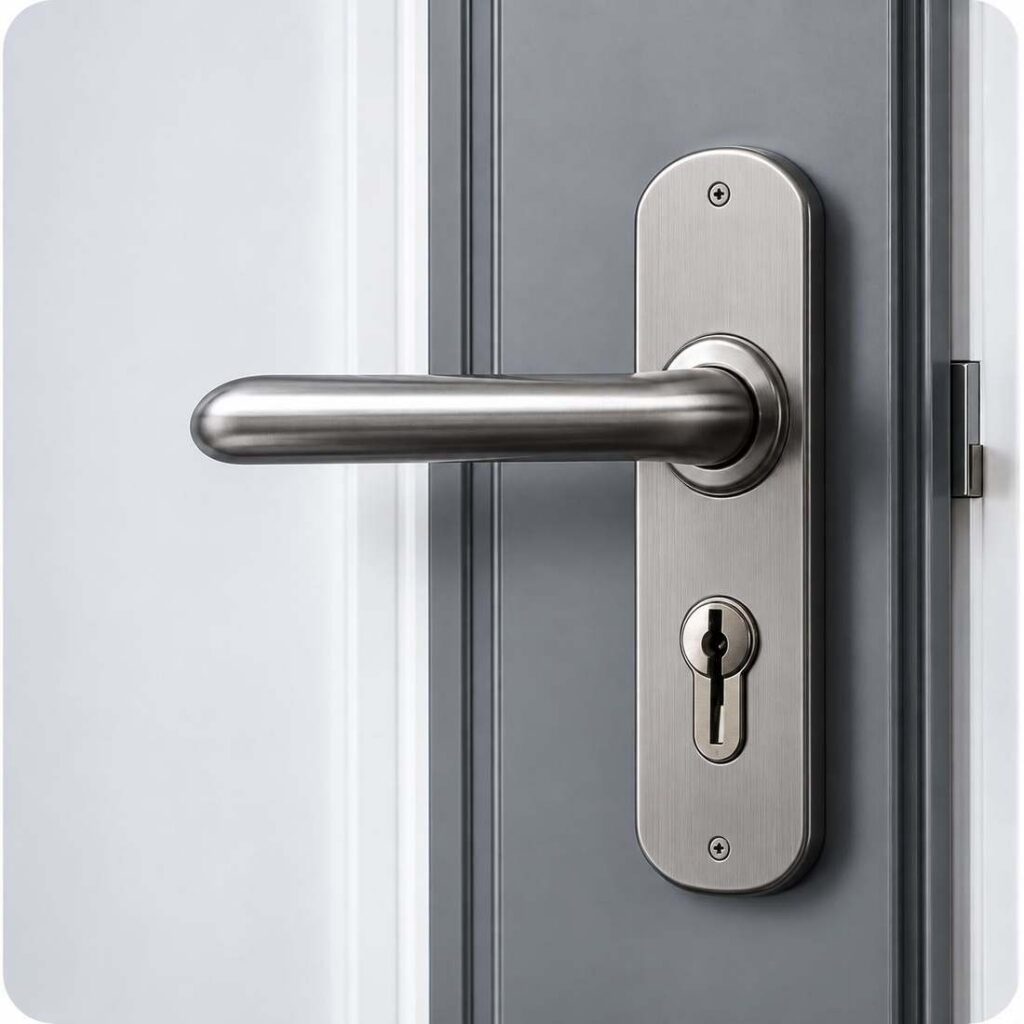
When a care worker finds a locked door, the first question is how the person inside is doing. Call 112 if there is reason to suspect an acute medical emergency or immediate danger. For an ordinary access problem, follow the care provider’s agreed contact procedure.
Contents
What does the care worker actually know?
A care worker arrives for an agreed visit but nobody opens the door. Tell the responsible contact what you can observe: you arrived at the correct entrance at the agreed time, rang the bell and perhaps heard a call from inside. Distinguish observations from assumptions. Silence from the buzzer might be an intercom fault. A call for help or other signs of immediate danger change the situation. In that case, do not wait for a private locksmith appointment.
When calling emergency services, give the street, building number, building section, floor and reason for concern. Explain where you are standing and whether the route to the flat is clear. Stay available, answer the dispatcher’s questions and end the call when instructed. Others can meet responders at an agreed entrance if safe. Medical details belong in the conversation with the responsible service, not on a publicly visible doorbell label.
Use the agreed arrangements for an access problem
If the resident can be contacted and confirms that the door simply cannot be opened, agree on the next step with them and the care coordinator. Is there a stored key, who holds it and who may release it? A key at the office is not necessarily authorised for this visit or available in time. Record whether instructions already exist in the care contract, in a separate agreement or are being given for the first time.
Relatives can provide valuable information. Still establish who can actually commission the opening. One person may meet the technician while another confirms authority. Keep those roles distinct. Regular visits do not automatically authorise a care worker to approve a new cylinder or changes to a communal door. If authority is unclear, the care coordinator remains the first organisational contact.
Give the locksmith a workable brief
A clear enquiry might be: “The resident is on the phone. She confirms the visit and wants to let us in but cannot use her key. The care worker is on the second floor outside her flat.” This tells the firm that contact has been made and identifies the door. The firm will decide what other verification is needed in this case. Ask for the total price and record who is placing the order.
If the worker has to continue their rounds, arrange an explicit handover. A technician should not arrive without a contact because the person originally waiting has gone to another visit. Set a new meeting point and share the receiving person’s name through the agreed channel. If the resident’s condition changes and there is immediate danger before the visit, contact emergency services immediately.
Close the loop for the next visit
After routine entry, establish how the next authorised care visit will gain access. Was the door only opened or was its lock changed? Will the care service’s stored key still work? Have the responsible person confirm the new arrangements. Keys and information about where they are held belong in the agreed system, not in an openly accessible message. Record the door’s condition, the handover and any reply still due from management.
Check the contact chain before the next home visit
A correct number does little good if the agreed contact is on holiday. At a planned handover, check whether a deputy has been nominated and whether the resident knows their role. Staff should know when the regular coordinator is reachable and who takes over afterwards. This helps with an ordinary lockout. Where there are signs of an acute emergency, looking for another internal number must not delay calling emergency services.
Decision guide
| Situation | Next step |
|---|---|
| Immediate danger or suspected medical emergency | Call 112 and identify the correct building entrance. |
| Resident reachable, access arrangements unclear | Coordinate authorisation and spare keys with the care team. |
| Worker must leave before arrival | Arrange a named replacement contact and handover. |
Further reading
- Opening locked doors
- Türöffnung für Angehörige organisieren: Rollen und Rückfragen vorab klären (German)
- Türöffnung bei eingeschränkter Beweglichkeit: Den Termin passend organisieren (German)
- Berlin fire service: contact and emergency calls (German)
For regular visits, account for an additional lock with a door restrictor.


