
Key works on one side of the door only?
Your key works on one side of the door only? Describe the inside and outside separately and preserve the access you already have until the visit.
Contents
Same door, same key, two different results
You can enter with your key from outside, but from the inside the door will not lock as usual. Or the reverse happens. Record the two observations separately. Check that it really was the same key at the same flat door. A working communal entrance on the ground floor is not a comparison for the outside of a flat three floors up.
Ask other residents about the last normal use. Someone might remember that the inside had been stiff for a while, whereas the outside worked normally until yesterday. That timeline is useful. There is no need to reproduce the fault or shut an open door merely to confirm a theory.
Key works on one side: what is fitted on the inside?
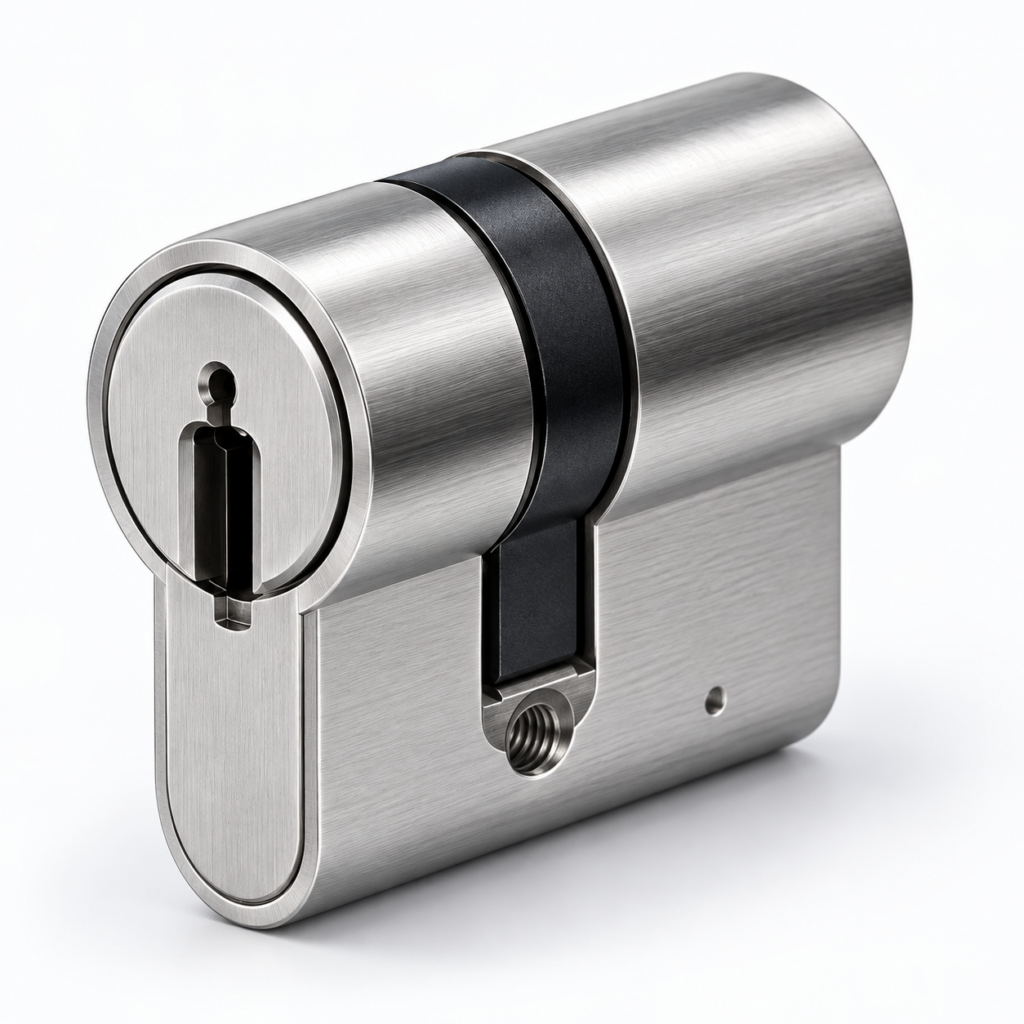
Some doors have an inside thumbturn. Others take a key on both sides. A separate additional lock might also be present. Describe what is actually fitted and what you normally operate. If there is an inside thumbturn, describe what it does. Saying the key will not fit on the inside would point the technician in the wrong direction.
Describe the exact stage. Does the key fail to enter on the affected side? Does it go in but refuse to turn? Or does it appear to move normally while the door stays locked? Those descriptions lead to different follow-up questions. Mention visible changes to the key. Do not force it further to obtain an answer.
What determines how urgent the visit is?
An accessible flat with someone able to watch the open door allows a different time window from a home where someone cannot use their normal exit. State which side the person is on and whether another normal exit is genuinely usable. Immediate danger takes priority. Otherwise establish whether the booking is for opening, inspection or restoration of locking.
If the trouble began after a change, give the date and identify the changed part if known. New fittings, a new door and a different cylinder are different histories. Keep any invoice handy. Timing alone cannot identify the cause.
If the key still works on one side after the visit
Agree which functions should work on each side before handover. Ask the technician to demonstrate the result. Include an inside thumbturn where one is fitted. If a particular key should be retired, store it separately. A short record of side, key and outcome will also make any follow-up clearer.
A record that keeps the two sides distinct
Two lines can be enough: “Outside: opened normally with my key this morning. Inside: later the same key went in but would not turn normally.” Add whether the door was open or closed each time. Attribute any observation made by someone else. The provider can then make sense of two situations that might otherwise sound contradictory.
Use the same two lines for the result after inspection. Record which side was checked and whether anything remains unresolved on the other side. That helps residents who were not present at the visit.
The key works on one side for more than one resident
Where keys are kept separately, two observations may involve one key or two different copies. Ask whether everyone used their own. In your report, call them “my everyday key” and “our household spare”, for example. There is no need to photograph the key cuts to distinguish the two accounts.
Decision guide
| Situation | Next step |
|---|---|
| Outside only | State where you are and what access remains. |
| Inside thumbturn fitted | Describe its behaviour separately. |
| Started after a repair | Have the part, date and receipt ready. |
Further guidance: Consumer advice on contracting a tradesperson (German)
Related services and guides
If you cannot leave the flat at all, see the guide to being locked inside your flat for arranging access from outside.


